











An eBike motor may supply the power, but the pedal sensor helps decide how that power reaches you.
That difference is easy to overlook on a specifications chart. It is much harder to miss once you start riding.
One bike may respond to the pressure of every pedal stroke, adding more power as you work harder. Another may recognize that the pedals are turning and provide a steady, dependable boost without asking much more from your legs.
Both can flatten hills.
Both can stretch a casual ride well beyond the point where you would normally turn around.
Both can turn “I guess I’ll take the car” into “Actually, I’ll ride.”
They simply have different personalities.
The Quick Explanation
A cadence sensor asks:
Are the pedals moving?
Once it detects pedal rotation, the system delivers assistance according to the Pedal Assist level you selected.
A torque sensor asks:
How hard is the rider pushing?
It measures pressure at the pedals and adjusts the motor’s contribution in proportion to your effort.
Or, in less technical terms:
Cadence sensing helps because you are pedaling.
Torque sensing helps according to how hard you are pedaling.
That single distinction influences how an eBike starts, climbs, cruises, maneuvers, and conserves battery power.
First, Meet the Middleman
The motor does not independently decide when to jump into your ride.
It needs information.
A pedal-assist sensor gathers that information and sends it to the bike’s controller. The controller interprets what is happening at the pedals, considers your selected assist setting, and tells the motor how much power to provide.
Think of the sensor as the translator between your legs and the motor.
The cadence sensor translates motion.
The torque sensor translates effort.
Now let’s leave the lab and take them for a ride.
Cadence Sensing: “I’m Pedaling. Take It From Here.”
A cadence sensor detects pedal rotation. Once the cranks begin moving, motor assistance engages according to the Pedal Assist setting.
You may be pressing firmly against the pedals.
You may be turning them lightly.
The sensor’s primary concern is that they are turning.
And that is exactly what some riders love about cadence sensing. You get the fun of pedaling an eBike without needing to pedal like you’re riding a traditional bike. Start turning the pedals, and the motor is ready to take over a big part of the work.
Think of it as throttle-like assistance activated by your feet. You still pedal, but you don't have to put in a ton of effort to get the bike moving quickly.
Cadence feels like:
A quick, consistent boost that lets the motor do more of the work.
Start pedaling and the motor joins you. Stop pedaling and it disengages.
That straightforward response is part of the appeal. You don't have to chase a “natural” cycling sensation or match the motor with your own effort. Start pedaling, and you get the boost. Keep the cranks turning, and the motor keeps pulling you along. For riders who bought an eBike because they want to go faster without working harder, that can be the whole point.
This can be a great fit when the goal is transportation, comfort, or simply an easier ride.
You can settle into a relaxed pedal rhythm and let the motor help you:
- Get up to speed without grinding through every pedal stroke
- Cruise farther without turning every ride into a workout
- Keep up with faster riders without matching their effort
- Save your legs for the parts of the ride you actually want to work for
- Enjoy the rush of an eBike without needing to pedal like you’re on a road bike
- Turn hills, headwinds, and long stretches into something you can simply power through
Cadence sensing is not the “lesser” form of assistance. It serves a different purpose.
It says: You pedal enough to keep things moving. I’ll take care of the rest.
The Lectric cadence experience
Not every cadence-based eBike feels the same.
Lectric PWR™ programming regulates power by Pedal Assist level rather than relying only on speed-based cutoffs. That helps create smoother, more controlled assistance while retaining the easygoing character cadence riders enjoy.
In other words, you still get the relaxed “turn the pedals and receive help” experience, but with power delivered more thoughtfully.
A natural Lectric fit: XP Lite2
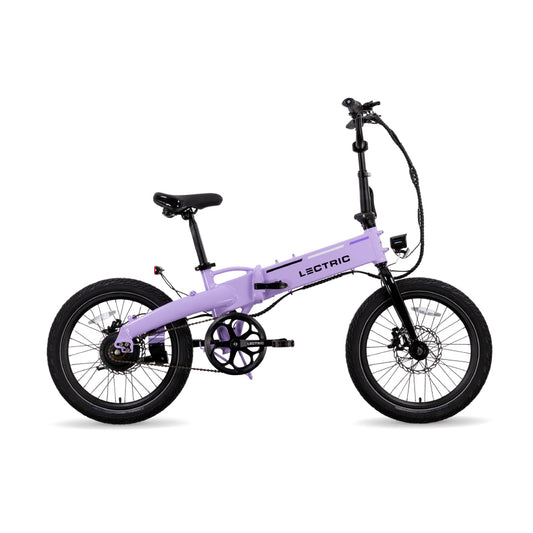
The XP Lite2 uses a cadence sensor paired with Lectric PWR programming.
That pairing makes sense for the bike.
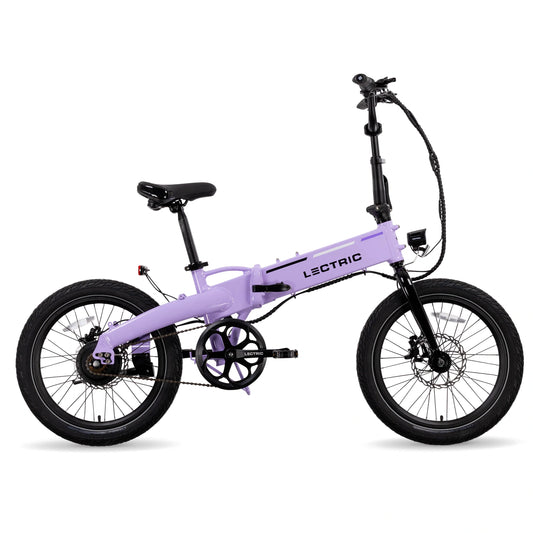
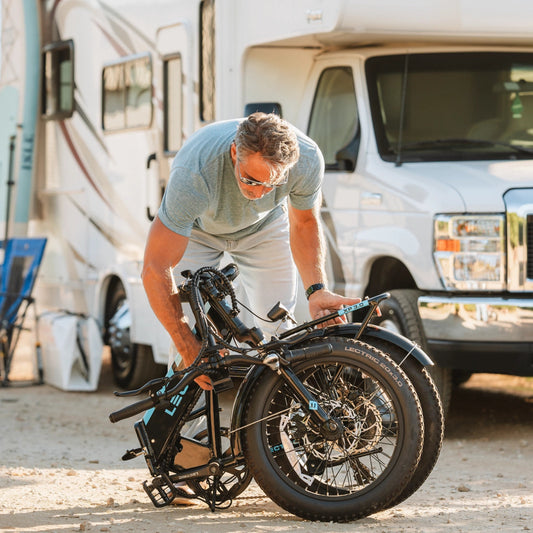
The XP Lite2 is lightweight, foldable, and refreshingly uncomplicated. A cadence sensor supports that mission by giving the rider dependable assistance without requiring heavy pedal pressure. It also gives the XP Lite2 that unmistakable eBike feeling: a little pedal movement can turn into a whole lot of forward momentum. You’re not trying to recreate the feeling of a traditional bike—you’re riding an eBike because you want the motor to make riding more fun.
It is a natural recommendation for:
- New eBike riders
- Apartment, RV, and small-space owners
- Riders who prioritize portability
- Casual neighborhood trips
- Anyone who wants meaningful assistance from a lighter, simpler bike
You pedal.
The XP Lite helps.
No engineering degree required.
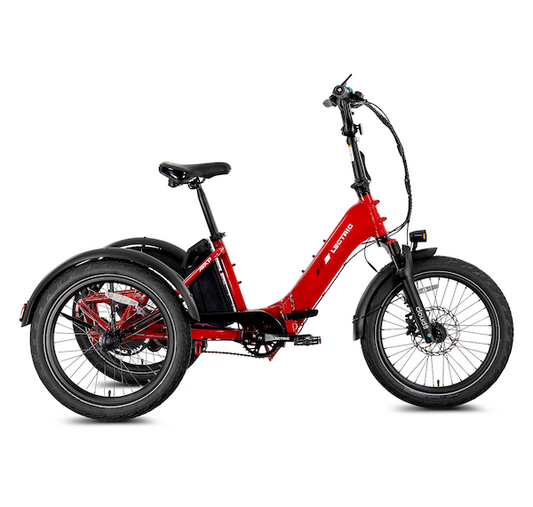
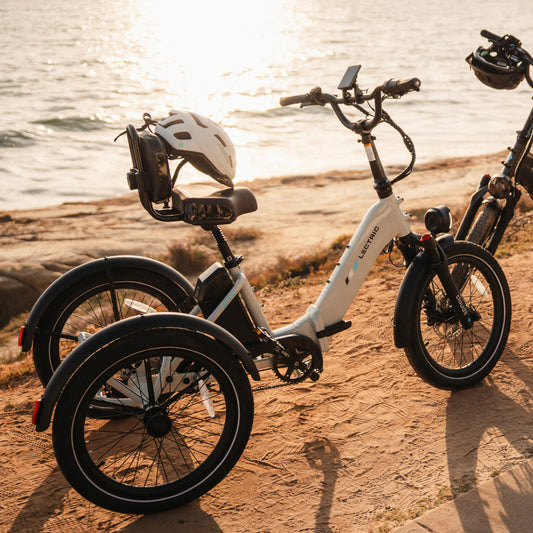
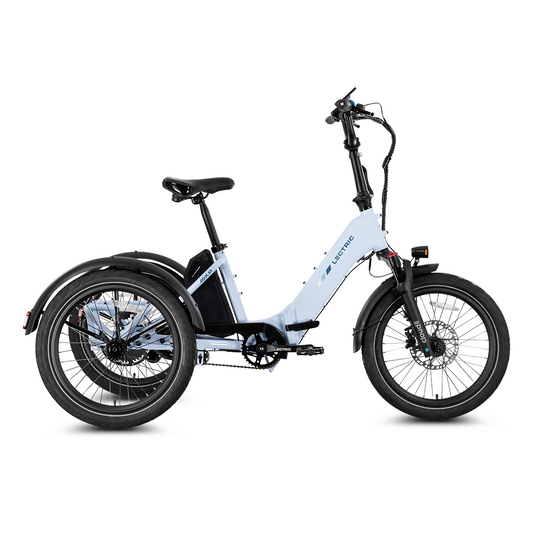
The 500W XP Trike2 also uses a cadence sensor with Lectric’s wattage-regulation programming. For riders drawn to three-wheel stability, accessibility, and controlled assistance, that predictable power delivery can be reassuring and easy to learn.

Torque Sensing: “Push More. Get More.”
A torque sensor measures how much force you apply to the pedals.
Press gently and the motor responds gently.
Push harder and the motor contributes more.
The system continually adjusts its assistance as your effort changes, creating a close relationship between what your legs do and what the bike does next.
Torque feels like:
Your legs, but stronger.
The motor does not feel as though it is simply waiting for permission to switch on. It feels connected to the pedal stroke itself.
Roll through a quiet neighborhood with light pressure and the assistance remains smooth and controlled.
Reach a hill, lean into the pedals, and the bike answers.
Stand up to accelerate and the motor recognizes the added effort.
It is still an eBike. You are still getting substantial help. The assistance simply follows your input more closely.
That can be especially satisfying for riders who enjoy the sensation of traditional cycling but would appreciate a considerably more capable version of themselves.
XP4
The XP4 uses Lectric’s in-house-designed torque-sensor programming to manage power based on rider effort.
That makes the XP4 especially versatile.
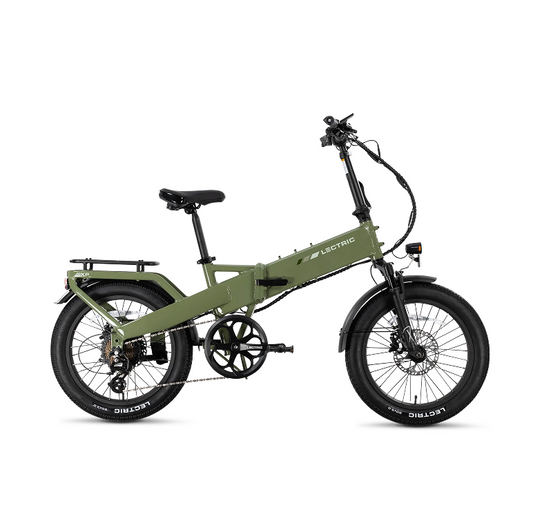
It can fold for storage or travel. It can handle commuting, recreation, and mixed terrain. Its torque sensor helps a bike designed for nearly everything feel controlled across nearly everything.
The XP4 is a natural recommendation for the rider who says:
“I want one Lectric that can do a little bit of all of it.”
Pedal casually and it cruises.
Push into a climb and it responds.
Load it into the car, RV, or garage and it still retains the compact practicality that made the XP line what it is.
XPeak2
The XPeak2 also uses a torque sensor, paired with Lectric PWR+ programming.
That responsiveness becomes especially useful when the terrain is inconsistent.
Loose surfaces, rolling trails and steeper grades rarely ask for one steady amount of power. They ask the rider to make constant adjustments. A torque sensor lets the motor react alongside those adjustments.
The XPeak2 is a natural recommendation for:
- Mixed-terrain riding
- Dirt roads and trails
- Steeper routes
- Riders who want an active, responsive feel
- Anyone whose definition of “bike path” gets increasingly generous
When the trail pushes back, push harder. The motor gets the message.
XPedition2
A cargo eBike can carry groceries, equipment, gear, or additional passengers. That also means its weight and balance may change considerably from one trip to the next.
The XPedition2 uses a torque sensor with Lectric PWR+ programming, allowing its assistance to respond to rider effort with more control.
That is particularly valuable when starting with a loaded bike, accelerating through an intersection, or managing a route with changing grades.
The XPedition2 is a natural recommendation for:
- Family transportation
- School drop-offs
- Grocery and errand runs
- Business or delivery use
- Riders replacing meaningful car mileage
- Anyone who has ever looked at a bike and thought, “Could this carry two kids and a week’s worth of snacks?”
The answer is yes.
The torque sensor helps make the answer feel manageable.

The Tale of Two Starts
Starting from a complete stop is one of the quickest ways to feel the difference between sensor types.
Cadence start
You begin rotating the pedals.
The sensor detects movement.
The motor delivers the power assigned to your selected Pedal Assist level.
The sensation: a quick hit of motor assistance that can make the bike feel eager to get moving.
You don't have to stomp on the pedals to get the motor's attention. A little movement tells the bike you're ready, and the motor can do the heavy lifting from there.
That’s part of the fun. You get the feeling of accelerating on an eBike without having to supply all the acceleration yourself.
Torque start
You apply pressure to the pedals.
The sensor recognizes that pressure immediately and responds in proportion.
The sensation: a gradual launch that follows your effort.
Push lightly for a measured start. Press harder when you want to move with more authority.
Which is better?
For easy, high-powered fun with less effort, cadence is hard to argue with.
For a more natural, responsive cycling feel, torque has the edge.
For riders who want both, Lectric has an interesting answer.
The Bikes That Let You Choose
Some rides do not fit neatly into Team Torque or Team Cadence.
Maybe you want a responsive workout on the way out and an easy cruise home.
Maybe one person in the household prefers a traditional cycling feel while another wants maximum help with minimum strain.
Maybe your opinion changes based on the weather, the route, or how ambitious breakfast was.
The XPress2 and XP Trike2 750 allow riders to switch between torque-sensing and cadence-sensing behavior through their settings.
That changes this discussion from “Which sensor should I buy?” to “Which sensor do I want today?”
XPress2: the commuter with two personalities
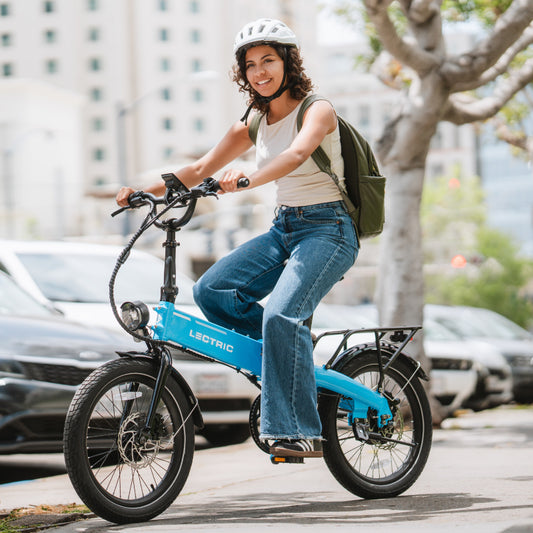
In torque mode, the XPress2 feels responsive, athletic, and closely connected to your pedal pressure.
In cadence mode, it becomes more relaxed and lets the motor handle more of the effort.
That flexibility makes the XPress2 especially compelling for:
- Daily commuters
- Couples or households sharing a bike
- Riders balancing exercise and transportation
- New riders still discovering their preferences
- Anyone who refuses to pick one side of a perfectly good argument
Morning commute? Use cadence mode and arrive composed.
Afternoon workout? Switch to torque and make your legs participate.
Long ride home into a headwind? Cadence mode would like a word.
XP Trike2 750W: adaptable assistance on three wheels
The XP Trike2 750 also lets riders choose between torque and cadence response.
That flexibility is particularly meaningful on an eTrike, where rider comfort, confidence and physical capability can vary widely.
Torque mode provides more proportional response.
Cadence mode provides easier assistance with less pedal pressure.
The right answer may differ from rider to rider or even from one part of the ride to another.
What Happens on a Hill?
Hills are excellent at exposing the personality of an eBike.
They are also excellent at appearing much steeper once you are already halfway up them.
On a cadence-sensor eBike
Select an appropriate Pedal Assist level, keep the cranks turning, and let the motor provide steady help.
You don't necessarily need to press much harder as the hill gets steeper. That means you can attack a climb without feeling like you need to become a stronger cyclist halfway up it.
Best for: riders who want the motor to absorb more of the climbing effort—and would rather enjoy the climb than earn it.
On a torque-sensor eBike
As the hill increases your pedal pressure, the sensor recognizes the added effort and asks the motor for more support.
The climb feels more interactive. You push, the bike pushes with you.
Best for: riders who want assistance to rise naturally with the challenge.
The sensor cannot replace good gear selection or erase gravity entirely. It can, however, make gravity considerably less persuasive.
What Happens in Traffic?
City and neighborhood riding rarely settle into one smooth pace.
There are intersections, driveways, pedestrians, tight turns, and drivers performing complex negotiations with their cup holders.
Cadence in traffic
A cadence system provides predictable assistance once the pedals rotate.
Using a lower assist level can make crowded or low-speed situations feel more controlled, while higher assist levels can give you a quick, effortless boost when the road opens up.
Rider advantage: easy acceleration without needing to put a lot of muscle behind it.
Torque in traffic
A torque sensor lets you regulate the bike through pedal pressure.
Apply light pressure while maneuvering slowly. Push harder when the road clears.
Rider advantage: precise, proportional acceleration.
This is one reason torque sensing feels so at home on bikes like the XP4 and XPress2. The bike can respond to the constant changes of a real route without every acceleration feeling identical.
What Happens on a Long Cruise?
This may be where personal preference becomes clearest.
Cadence feels like an extra gear you don't have to earn
Settle into a comfortable rhythm, keep the pedals moving, and receive dependable assistance.
You can cover serious ground without needing to produce serious effort on every pedal stroke.
That’s where cadence sensing can be ridiculously fun. You’re still participating in the ride, but you’re not responsible for generating all the speed. The motor handles the heavy lifting, leaving you to enjoy the acceleration, the scenery, and the feeling of covering ground quickly.
It’s less “I want my eBike to feel like a traditional bicycle” and more “I want to pedal just enough to make the motor kick in and then enjoy the ride.”
Torque feels like a very productive partnership
You remain more physically involved because the motor responds to your contribution.
Put in more effort and receive more support. Ease back and the motor eases with you.
That can make a long ride feel more active and connected while still dramatically extending what you could comfortably do on a traditional bike.
Which Sensor Is Better for Battery Range?
Torque sensors are often associated with efficient power use because motor assistance follows rider effort. When you contribute more, the motor may not need to carry as much of the workload.
Cadence systems can provide more consistent assistance with relatively little rider pressure, which may use more energy when higher assist levels are sustained.
But sensor type does not determine range by itself.
Battery use also depends on:
- Terrain
- Wind
- Speed
- Rider and cargo weight
- Tire pressure
- Temperature
- Gear selection
- Stops and starts
- Assist level
- How enthusiastically the rider interprets “Turbo”
A torque-sensor bike ridden aggressively can use more battery than a cadence-sensor bike ridden conservatively.
The greatest range feature remains the rider’s right thumb and two legs.
One controls the settings.
The others are encouraged to contribute.

The Lectric Sensor Lineup at a Glance
Choose cadence when you want easy, consistent help
XP Lite2
Sensor: Cadence with Lectric PWR programming
Ride personality: Lightweight, simple, and surprisingly lively
Best for: Portability, casual trips, RV travel, smaller spaces, and riders who want to pedal less while still getting plenty of motor-powered fun
XP Trike2 500
Sensor: Cadence with wattage-regulation programming
Ride personality: Stable, controlled and approachable
Best for: Three-wheel confidence, accessibility, recreational riding, and predictable assistance
Choose torque when you want natural, responsive help
XP4
Sensor: Torque
Ride personality: Versatile, smooth and highly adaptable
Best for: The rider who wants one folding eBike for commuting, recreation, travel, and everyday use
XPeak2
Sensor: Torque with Lectric PWR+
Ride personality: Responsive and terrain-ready
Best for: Trails, dirt roads, hills, and riders who enjoy actively working with the bike
XPedition2
Sensor: Torque with Lectric PWR+
Ride personality: Powerful, controlled and load-conscious
Best for: Cargo, families, errands, and replacing substantial car mileage
Choose both when your riding style changes
XPress2
Sensor: Selectable torque or cadence
Ride personality: Athletic when you want it, relaxed when you need it
Best for: Commuting, shared bikes, and riders who want both exercise and effortless transportation
XP Trike2 750
Sensor: Selectable torque or cadence
Ride personality: Powerful, stable and customizable
Best for: Riders who want three-wheel stability with greater power, range, and control over how assistance feels
So, Which Sensor Is Right for You?
Choose a cadence sensor when you want:
- Big motor assistance without big pedal effort
- Quick, consistent acceleration
- Easy cruising at speed
- The thrill of an eBike without a workout attached
- A straightforward, low-effort ride
- The motor to do more of the heavy lifting
Choose a torque sensor when you want:
- Assistance proportional to your effort
- A natural cycling sensation
- Smooth low-speed control
- Responsive climbing
- A more active relationship with the bike
Choose a switchable system when you looked at both lists and said, “Correct.”
There is no universal winner because riders are not universal.
A commuter trying to arrive without breaking a sweat may love cadence mode.
A longtime cyclist may immediately prefer the connected response of torque sensing.
A rider carrying kids or cargo may appreciate the control of torque.
Someone managing fatigue or joint discomfort may value the easier assistance cadence sensing can provide.
A couple sharing one eBike may want access to both.
The useful question is not which sensor sounds more advanced.
It is which one creates the ride you want.
Cadence sensing says, “You pedal. I’ll make it fun.”
Torque sensing says, “Show me what you need.”
And on the XPress2 or XP Trike2 750, you can decide which answer sounds better after you leave the driveway.