














America just turned 250 years old.
That's 250 years of innovation, exploration, questionable fashion choices, and an endless pursuit of finding better ways to get from Point A to Point B.
In 1776, nobody was pedaling anywhere.
If you wanted to travel, your options were pretty straightforward:
- Walk.
- Ride a horse.
- Convince someone with a wagon to let you hop in.
- Or simply decide wherever you were headed wasn't worth the trip.
It's a good reminder that transportation has always been about solving the same problem.
How do we go farther, faster, and with a little less suffering?
The answer has evolved from horses to hobby horses, from giant wheels to gears, from beach cruisers to BMX bikes, and eventually to electric bicycles that make climbing hills feel suspiciously easy.
So in honor of America's 250th birthday, let's take a ride through the wonderfully strange history that eventually led us here.
1776: Peak Horsepower
America had just declared its independence. George Washington rode horses. Farmers rode horses. Messengers rode horses.
If your horse got tired...
Congratulations.
So did you.
Fun fact: The term horsepower literally comes from comparing engines to the amount of work one horse could perform.
Long before electric motors, horses were the original performance benchmark.

1817: The First Bicycle (Sort Of)
German inventor Karl Drais introduced what became known as the Draisine or "running machine."
Imagine a bicycle... without pedals.
Riders simply sat on the saddle and Flintstones-style pushed themselves forward with their feet. It looked ridiculous. It also proved something revolutionary:
Humans could actually balance on two inline wheels.
Every modern bicycle—and every eBike—can trace part of its family tree back to this awkward little invention.
Fun Trivia: Drais was inspired in part by a worldwide horse shortage after the eruption of Mount Tambora in 1815 devastated crops and livestock.
Sometimes necessity really is the mother of invention.

1830s–1870s: Pedals Arrive. Common Sense Takes a Little Longer.
Eventually someone asked the obvious question:
"What if we attached pedals?"
Early bicycles mounted those pedals directly to the front wheel.
The result? Every pothole became a full-body experience.
Then came the legendary Penny-Farthing, with its enormous front wheel and tiny rear wheel.
The thinking was simple: A bigger wheel meant more distance per pedal stroke. The execution was... exciting.
Your head sat six feet off the ground, and emergency braking generally involved becoming briefly airborne.
It was less "cycling" and more "trust falling with style."

1885: The Bicycle Finally Grows Up
Then came the invention that changed everything.
The Safety Bicycle.
Equal-sized wheels. Chain drive. Lower center of gravity. Steering that actually made sense.
Nearly every bicycle you've ever ridden—including today's eBikes—still follows the same basic blueprint.
Sometimes the biggest innovation isn't flashy.
It's finally getting the fundamentals right.

1890s: America Falls in Love with Bikes
By the end of the 19th century, bicycles had become a nationwide phenomenon.
Cycling clubs appeared everywhere. Road advocacy groups pushed for better infrastructure. Manufacturing techniques improved. Rubber tires got better. Steel tubing got lighter.
Entire industries were born because millions of Americans suddenly wanted to ride.
The bicycle wasn't just transportation anymore. It represented freedom.
That part hasn't changed.

1903: The Bike Shop That Taught the World to Fly
Everyone remembers the airplane.
Fewer people remember the bicycle shop.
Before they changed aviation forever, Wilbur and Orville Wright owned and operated the Wright Cycle Company in Dayton, Ohio.
They didn't just repair bicycles. They built them.
Designing lightweight frames, balancing unstable machines, understanding steering geometry, chains, sprockets, bearings and mechanical efficiency all became the engineering education that eventually produced the world's first successful airplane.
In a very real way...
America's first airplane had bicycle DNA.
Fun Trivia: The Wright Flyer even used a bicycle chain-inspired drivetrain to transfer power from the engine to its propellers.
Turns out, learning how to balance two wheels wasn't a bad foundation for learning how to fly.
1930s–1960s: California Gives Us the Beach Cruiser
While some companies chased speed... California chased vibes.
Beach cruisers appeared with balloon tires, wide handlebars, upright riding positions and coaster brakes.
They weren't built for racing. They were built for boardwalks, beach towns, ice cream runs and taking the scenic route home.
That relaxed riding philosophy still influences countless comfort bikes and many modern eBikes today.

1940s–1960s: Every Kid's First Taste of Freedom
Long before smartphones... Long before social media... There was one question every kid asked: "Can I ride my bike?"
Bikes carried kids to Little League. To fishing ponds. To the corner store. To their best friend's house without asking Mom for a ride.
Many Americans earned their very first paycheck delivering newspapers before sunrise from the seat of a bicycle.
Paper routes taught responsibility. Bikes taught independence. For generations, your bicycle wasn't just transportation... It was your first driver's license.

1963: The Bike Every Kid Wanted
Then came the bike that changed playground status forever.
The Schwinn Sting-Ray.
Banana seat. Ape-hanger handlebars. Tiny front wheel. Big attitude.
Adults weren't entirely convinced. Kids absolutely lost their minds. It became one of America's first true bicycle icons.
You didn't just ride your Sting-Ray. You personalized it. Wheelie bars. Sissy bars. Streamers. Baseball cards clipped to the spokes with clothespins to make motorcycle noises.
If you spent an afternoon turning your bike into the loudest thing on the block... You understand.

1970s: America Discovers the Ten-Speed
Before carbon fiber. Before suspension. Before batteries... There was the ten-speed.
Suddenly everyday riders had multiple gears to climb hills, ride farther and keep pace with America's growing fitness movement.
Millions of them still hang from garage rafters across the country.
If you've ever inherited a bike from your parents, there's a decent chance it had skinny tires, down-tube shifters and enough gears to make you feel like you belonged in the Tour de France, even if you were just riding to the grocery store.
1970s–1980s: BMX Was Invented by Kids
Southern California kids loved motocross.
Motorcycles? Not so affordable.
So they grabbed Sting-Rays, reinforced them, headed to vacant dirt lots and started racing anyway.
That's how BMX was born. Not inside a boardroom. Inside neighborhoods.
Soon there were organized races. Jump parks. Freestyle tricks. An entire culture.
Then Hollywood noticed.
In 1982, E.T. the Extra-Terrestrial convinced an entire generation that bicycles could fly.
Technically only one did.
Thousands immediately tried anyway.
By the 1990s, the XGames had turned BMX riders into household names.
Backflips became career paths. Parents became nervous. Kids immediately looked for bigger ramps.

1970s–1990s: The Mountain Bike Heads Off-Road
While BMX riders were catching air...
Another group of riders in Northern California looked at steep fire roads and thought: "We should ride down those."
Mountain biking was born.
What started as modified cruiser bikes barreling down dirt hills became an entirely new category that transformed cycling forever.
Suspension. Knobby tires. Disc brakes. Adventure became the destination.
The Electric Idea Was Older Than You Think
Believe it or not, inventors were experimenting with electric bicycles as far back as the late 1800s.
The concept wasn't the problem. The batteries were.
For decades, electric bikes were heavy, expensive and limited by the technology of the time.
Only after lithium-ion batteries, compact motors and smarter controllers arrived did the modern eBike finally become practical.
Sometimes history isn't waiting for a better idea. It's waiting for better batteries.
The Early American eBike Rebels
As modern eBikes began gaining traction, a handful of American companies believed they could be more than niche curiosities.
Brands like Juiced Bikes helped prove riders wanted real performance, real range and bikes capable of replacing car trips, not just supplementing them.
Those early pioneers helped establish the performance credibility that pushed the entire category forward.
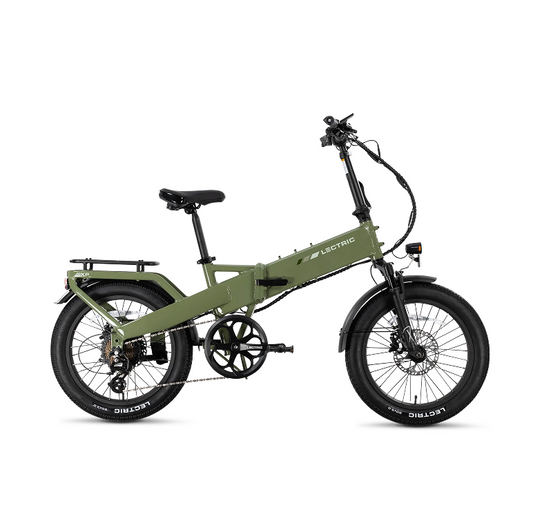
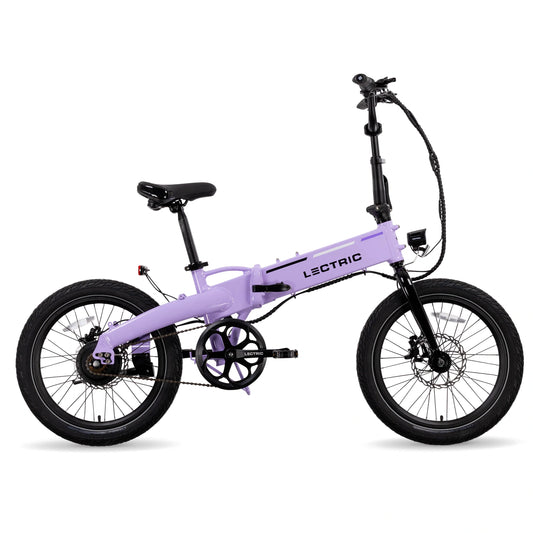
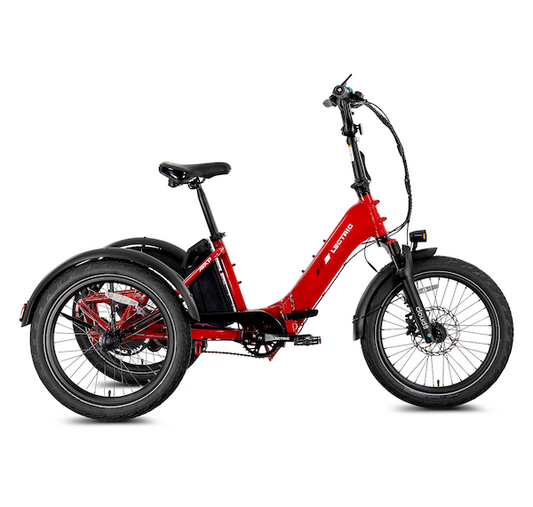
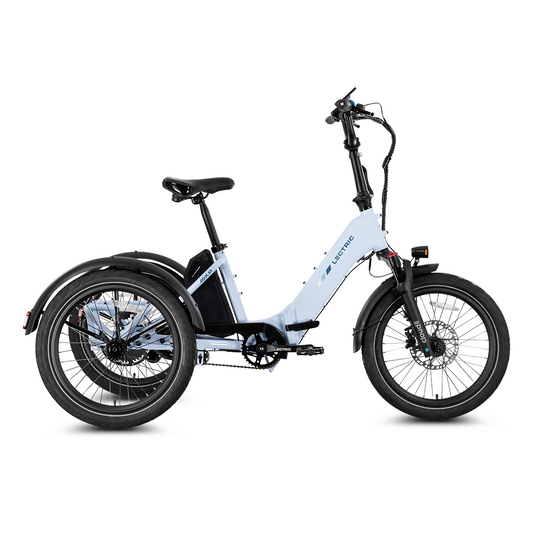
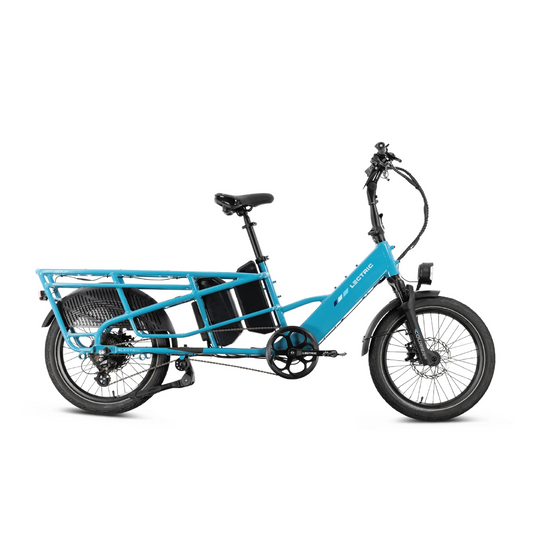
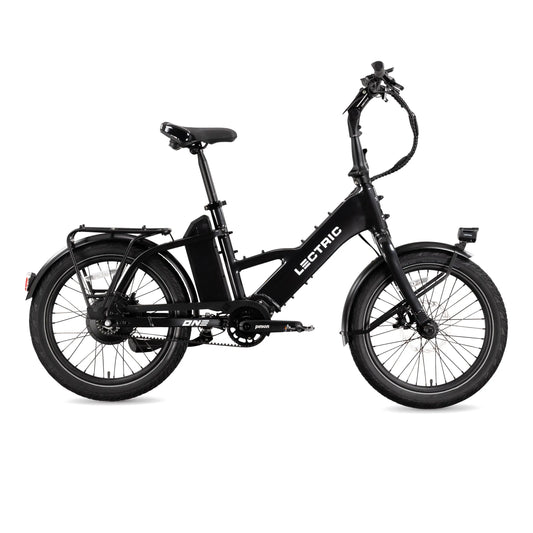
Then Lectric Changed the Conversation
The next breakthrough wasn't necessarily making eBikes faster. It was making them attainable.
When Lectric launched in 2019, the mission was refreshingly simple:
- Build capable bikes.
- Keep prices approachable.
- Ship them fully assembled.
- Welcome more people into riding.
That formula resonated in a big way.
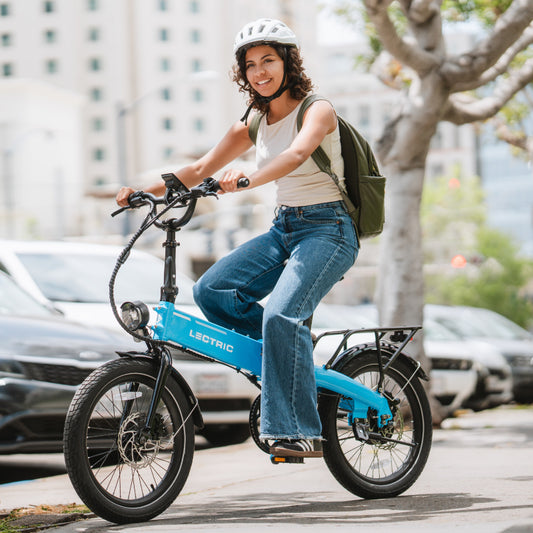
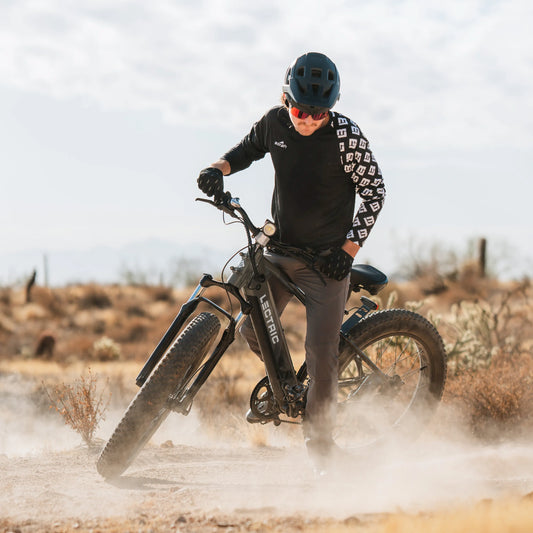
Today, Lectric has helped hundreds of thousands of riders discover something they may have forgotten since childhood: How much fun it is to simply ride a bike.
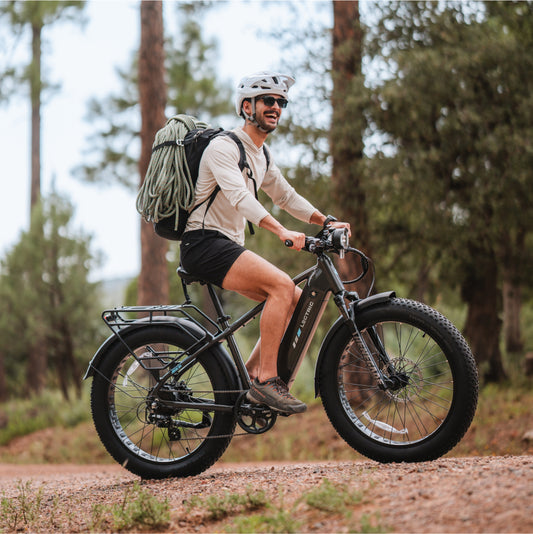
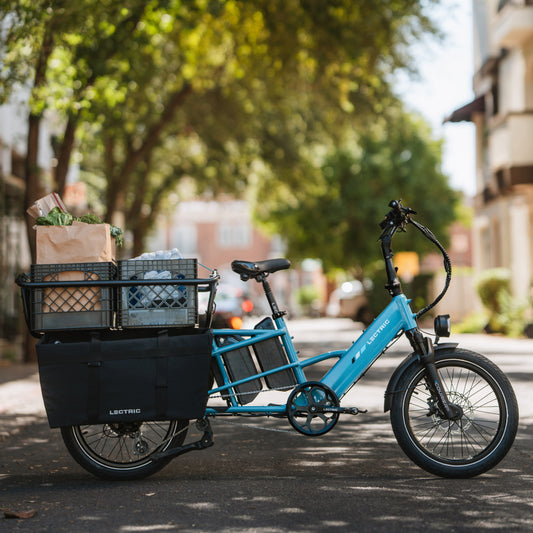
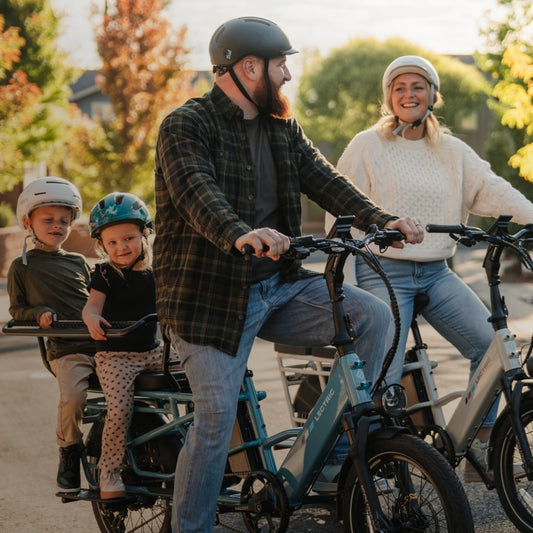
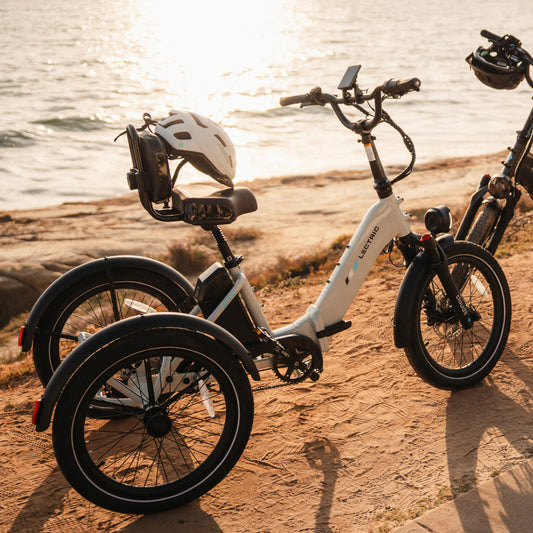
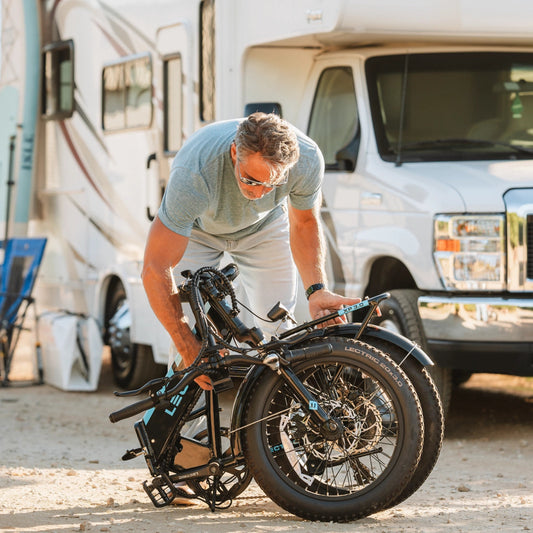
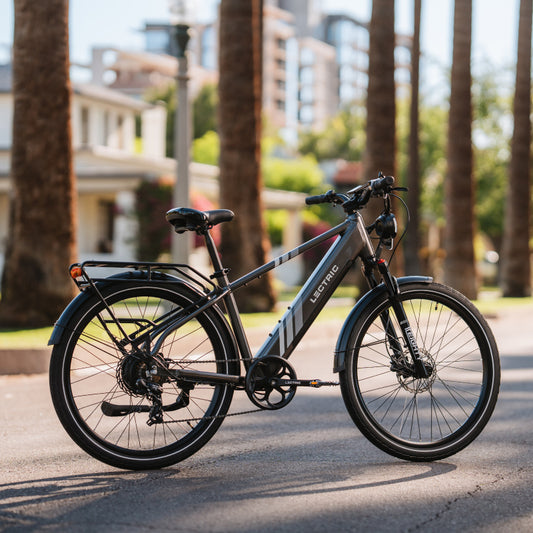
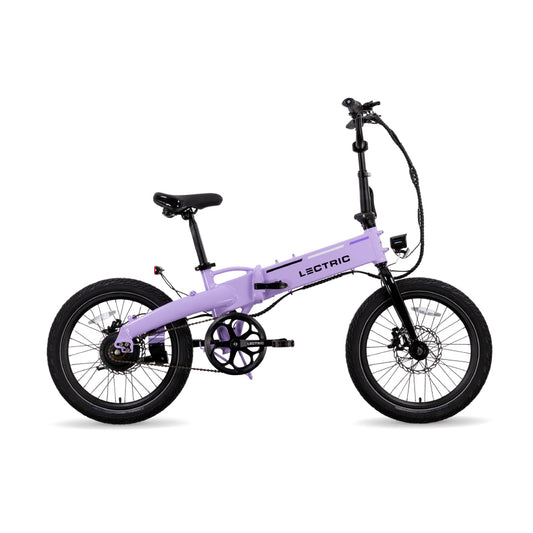
Whether it's replacing short car trips, commuting to work, exploring campgrounds in an RV, cruising the beach, grabbing coffee or just taking the long way home, Lectric has introduced an entirely new generation to life on two wheels.
Sometimes the biggest innovation isn't inventing something new. It's making something great accessible to more people.

2026: America's Next Great Bicycle Era
Today's eBikes include:
- Hydraulic disc brakes
- Integrated lighting
- Fat tires
- Powerful motors
- Smart displays
- Long-range batteries
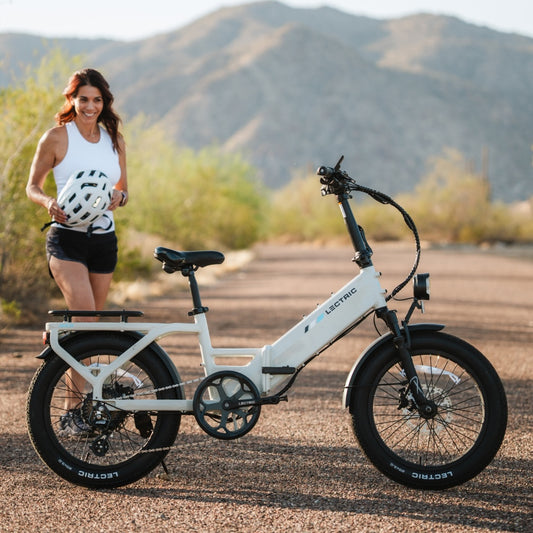
- Foldable frames
Technology that riders from 100 years ago could never have imagined. Yet somehow... The feeling is exactly the same.

Every Generation Gets the Bike It Needs
America's founders had horses.
The Wright brothers had bicycles.
Your grandparents had beach cruisers.
Your parents probably had a Sting-Ray or a ten-speed.
Gen X had BMX.
Mountain bikers found dirt.
Performance riders embraced the first modern eBikes.
Today, millions of Americans are discovering that an eBike might just be the most practical—and enjoyable—way to get around.
The technology has changed, but the feeling hasn't.
For more than two centuries, two wheels have represented the same thing: Freedom.
Which feels like a pretty fitting way to celebrate America's 250th birthday.
Stars, Stripes, & Spokes: A Few Fun Bike Facts
- The first bicycles didn't have pedals.
- "Horsepower" was literally measured against actual horses.
- The Wright brothers learned many of the engineering principles behind flight while building bicycles.
- For generations, paper routes were America's unofficial first job—and countless newspapers were delivered by bicycle.
- The Schwinn Sting-Ray helped inspire BMX and remains one of the most recognizable bicycles ever built.
- E.T. made kids believe bicycles could fly. The X Games made them want to backflip.
- The idea for electric bicycles is over 125 years old—but modern battery technology finally made them practical.
- Brands like Juiced helped prove American eBikes could deliver serious performance. Lectric helped make eBikes accessible to everyday riders across the country.
Here's to 250 years of American ingenuity and wherever the next ride takes us.