














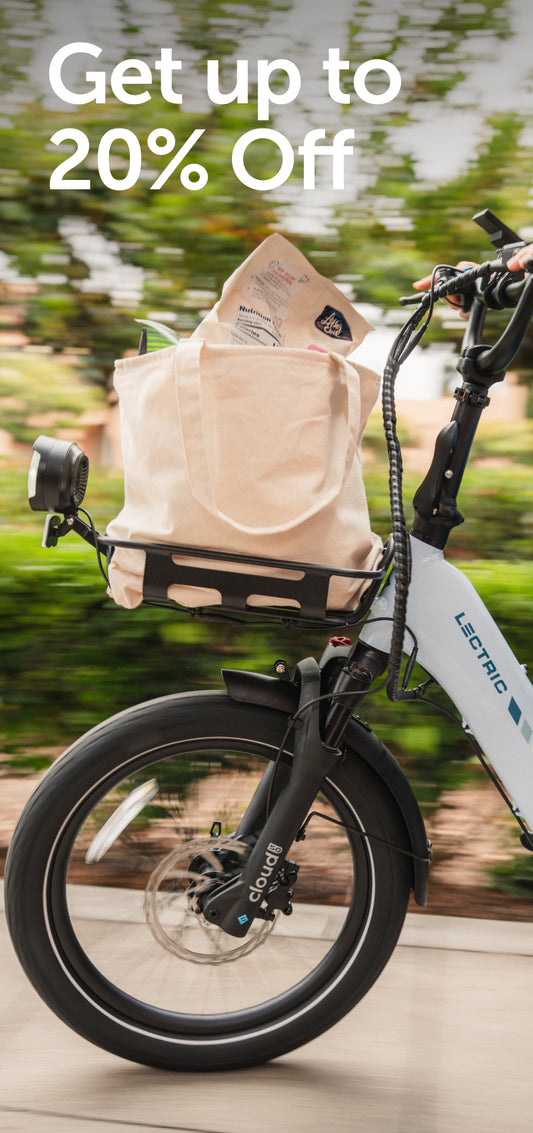




A Clear, Practical Look at Emissions, Batteries, and Everyday Impact
Around Earth Day, a lot of products start wearing green labels. Some deserve it. Some… stretch it.
eBikes are one of the few that actually hold up under a closer look.
They’re not just a feel-good alternative—they’re a genuinely effective way to reduce everyday environmental impact, especially when it comes to how we get around.
So let’s break it down in plain language.
Why Transportation Matters So Much
If you want to talk about environmental impact, transportation is one of the biggest levers we have.
According to the Environmental Protection Agency, it’s the largest source of greenhouse gas emissions in the United States—and most of that comes from everyday passenger vehicles.
Not long road trips. Not rare events.
It’s the short, routine drives:
- Commuting to work
- Running errands
- School drop-offs
- Quick trips just a few miles away
In fact, more than half of all car trips in the U.S. are under three miles—and those are often the least efficient, with higher emissions per mile.
That’s exactly where eBikes shine.

How Efficient Are eBikes, Really?
From an energy standpoint, eBikes are incredibly efficient—far more than most people realize.
- A full charge costs just a few cents
- You can travel dozens of miles on minimal electricity
- They use a fraction of the energy required for any type of car
Even electric cars, while a big improvement over gas vehicles, use significantly more energy per mile.
eBikes? Once charged, they produce zero emissions while riding.
That’s not just “better”—it’s a completely different scale of impact.
Let’s Talk About the Battery
Yes, eBikes use lithium-ion batteries—and yes, there’s an environmental cost to producing them.
But the scale matters.
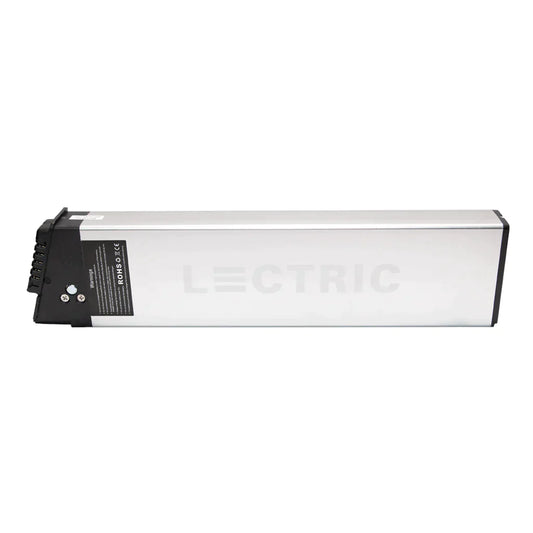
- An eBike battery weighs around 5–8 pounds
- It uses a small fraction of the materials in an electric car battery
- It lasts for years with proper care
When researchers look at the full lifecycle—from manufacturing to everyday use—they consistently find that the footprint of producing an eBike battery is offset relatively quickly.
In other words: the more you ride, the more that initial impact fades into the background.
Batteries vs. Gas: A Different Kind of Trade-Off
When people think about environmental impact, batteries tend to get a lot of attention—and it’s fair to ask why.
But the key difference between batteries and gas is when the impact happens.
Gas-powered cars create emissions every single time you drive them.
Every trip burns fuel. Every mile adds more carbon to the atmosphere. There’s no off switch.
eBike batteries work differently.
There is an environmental cost to producing them—but it’s mostly upfront, not ongoing. Once that battery is made and on the road:
- It can be recharged hundreds (even thousands) of times
- It powers miles of riding with minimal electricity
- It produces zero direct emissions while in use
And because eBike batteries are relatively small, that initial footprint is far lower than what’s required for a car—gas or electric.
So while a battery isn’t impact-free, it’s part of a system where the environmental cost is limited—and quickly offset the more you ride.
Gas, on the other hand, is a system of continuous impact.
That’s the real distinction:
One adds emissions every mile.
The other reduces them with every mile ridden instead of driven.
The Real Impact: Replacing Car Trips
This is where eBikes go from “efficient” to genuinely impactful.
eBikes make it easier to:
- Ride farther without exhaustion
- Handle hills, wind, and heat
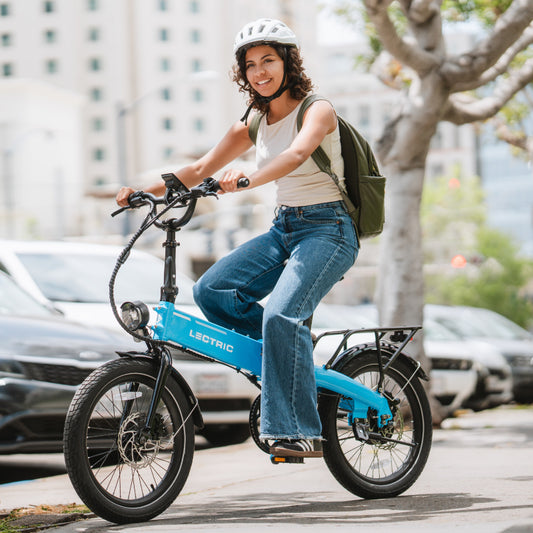
- Commute without arriving sweaty
- Choose riding over driving more often
That last part is what matters most.
Because when an eBike replaces a car trip—even a short one—the environmental benefits add up fast.
And unlike traditional bikes, eBikes make that switch realistic for a lot more people.

Cleaner Air Where It Actually Matters
Beyond carbon emissions, there’s something people notice immediately: air quality.
Cars produce pollutants like:
- Nitrogen oxides (NOₓ)
- Fine particulate matter
- Brake and tire dust
These directly impact the places we live.
eBikes don’t produce these emissions while riding. And when more trips shift from cars to bikes, communities benefit with:
- Cleaner air
- Less noise
- Less congestion
These aren’t abstract climate wins—they’re everyday quality-of-life improvements.
A Lighter Impact on Everything Around Us
Cars don’t just use fuel—they require space and infrastructure:
- Roads
- Parking lots
- Garages
- Constant maintenance
All of that comes with a long-term environmental cost.
eBikes, by comparison, are incredibly light on infrastructure. They take up less space, require fewer resources, and fit more easily into existing environments.
It’s a quieter kind of impact—but a meaningful one.
Built to Last (And Keep Paying Off)
No product is impact-free. What matters is how long it stays useful.
Well-built eBikes are:
- Durable
- Easy to maintain
- Designed for years of use
And even when a battery eventually needs replacing, that extends the life of the bike rather than ending it.
The longer an eBike replaces car trips, the better its environmental impact becomes.
So… Do eBikes Really Help the Environment?
Yes—and in a very practical, everyday way.
eBikes:
- Use far less energy per mile than cars
- Produce significantly fewer lifetime emissions
- Improve local air quality
- Reduce reliance on heavy infrastructure
- Make it easier to drive less without sacrificing convenience
They’re not a niche solution or a compromise—they’re one of the most accessible ways to make a real difference in how we move.
Earth Day isn’t about perfection. It’s about progress.
And swapping even a few car trips each week for an eBike ride is a simple shift that adds up—quickly, quietly, and in a way that fits real life.